
Cooking guides·
How to Cook Patagonian Squid: A Restaurant-Quality Guide for Your Home Kitchen
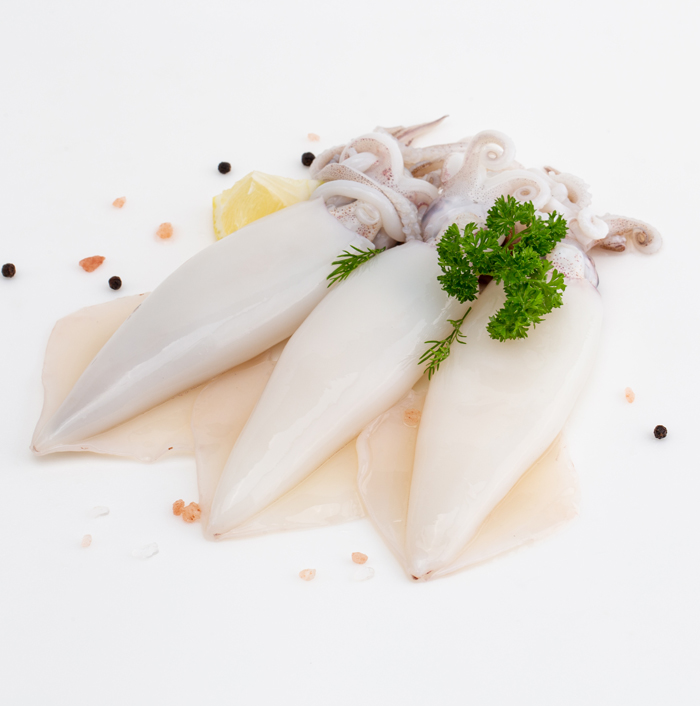
How to Cook Patagonian Squid
Patagonian squid is one of the most rewarding seafood ingredients to cook at home — but it has a reputation for being unforgiving. Cook it for two minutes and it's tender and sweet. Cook it for ten and it's rubber.
What is Patagonian squid?
Patagonian squid (Doryteuthis gahi) is caught in the cold, clean waters of the South Atlantic off the coast of Argentina and the Falkland Islands. The cold-water environment produces firmer, sweeter flesh than warm-water varieties, with longer tubes and tender tentacles that hold up beautifully to grilling, stuffing, and quick frying.
Because Patagonian squid is flash-frozen on the boat within hours of being caught, the version you order online is often higher quality than what you'd find at a market — there's no day-old defrost in the supply chain.
Cleaning and preparing the squid
If your squid arrives whole, cleaning is straightforward. If it arrives pre-cleaned (most commercial Patagonian squid does), skip to the scoring step.
1. Separate the head from the body. Hold the body in one hand and the head in the other and pull gently. The innards come out with the head. 2. Remove the quill. The clear plastic-like spine inside the body tube slides out easily. 3. Pull off the membrane. Rub the body with your thumb to lift the thin purple-grey skin, then peel it off. 4. Cut the tentacles. Slice the tentacles off the head just below the eyes. Discard the head and the hard beak in the center of the tentacles. 5. Score the body. For grilled or pan-seared preparations, slice the body open along one side and score the inside surface in a diagonal cross-hatch pattern — shallow cuts, about 5mm apart. This lets the squid curl decoratively and absorb marinade better.
Pat everything dry with paper towels. Wet squid steams instead of sears.
Method 1: Grilled (best for whole or scored bodies)
The classic Mediterranean preparation, and the easiest if you have a hot grill or grill pan.
• Marinate scored bodies and tentacles for 30 minutes in olive oil, lemon juice, garlic, chopped parsley, and a pinch of chili flakes. • Heat your grill to its hottest setting. You should not be able to hold your hand 5cm above the grate for more than 2 seconds. • Grill the bodies scored-side down for 90 seconds, flip, grill another 60 seconds. The flesh should turn opaque and the scored pattern should curl into a beautiful pinecone shape. • Grill tentacles for 60 seconds per side.
Finish with a squeeze of lemon and flaky sea salt.
Method 2: Pan-seared (best for sliced rings)
If you don't have a grill or you bought pre-sliced rings, the screaming-hot pan method delivers the same fast-cook tenderness.
• Heat a heavy stainless or cast-iron skillet over the highest heat for 3 minutes. Add 1 tablespoon of neutral oil. • When the oil shimmers, add the squid in a single layer. Do not crowd the pan — work in batches if you have to. • Sear for 60–90 seconds without moving the squid. Toss once, cook another 30 seconds. • Remove from the pan immediately. Carryover heat will continue cooking it for another 30 seconds on the plate.
Method 3: Slow-braised (best for tougher cuts or stuffed bodies)
If you missed the 2-minute window and the squid is already tough, switch strategies. A long braise breaks down the seized proteins and turns rubber back into tender.
• Sauté onion, garlic, and a splash of white wine in a heavy pot. • Add chopped tomatoes, a pinch of saffron, and the squid (whole or cut into bite-size pieces). • Cover and simmer over low heat for 40–60 minutes. The squid releases its own liquid in the first 15 minutes; let that reduce. By minute 45 the texture is silky and fork-tender.
This is the technique behind every classic Mediterranean squid stew — calamari in umido, seppie in zimino, xipirones en su tinta. Patient cooking with humble ingredients.
How to know it's done
Squid is done when the flesh turns from translucent to opaque white, with a slight pearlescent sheen. Tentacles curl into tight knots. Bodies curl gently around the scored cuts. If you're guessing whether it's cooked, taste a piece — properly cooked squid tastes sweet and a little nutty, with a clean snap. Rubbery squid tastes flat and chews like a balloon.
Serving suggestions
• Grilled: Over a salad of arugula, blood oranges, and shaved fennel. Or piled onto charred bread with a smear of aioli. • Pan-seared: Tossed through linguine with garlic, chili, and good olive oil. Or in a paella with chorizo and saffron rice. • Braised: Spooned over polenta or soft pillowy bread to soak up the sauce. A glass of Albariño on the side.
Where to buy
Di Peppi sources Patagonian squid directly from licensed South Atlantic fisheries — flash-frozen at sea, never re-thawed, and delivered to your door across Lebanon. Shop our seafood catalog or browse our curated bundles for sharing and gatherings.
Browse our full catalog of premium delicacies or explore curated bundles for sharing.